|
(FYP) Yap Simon
|
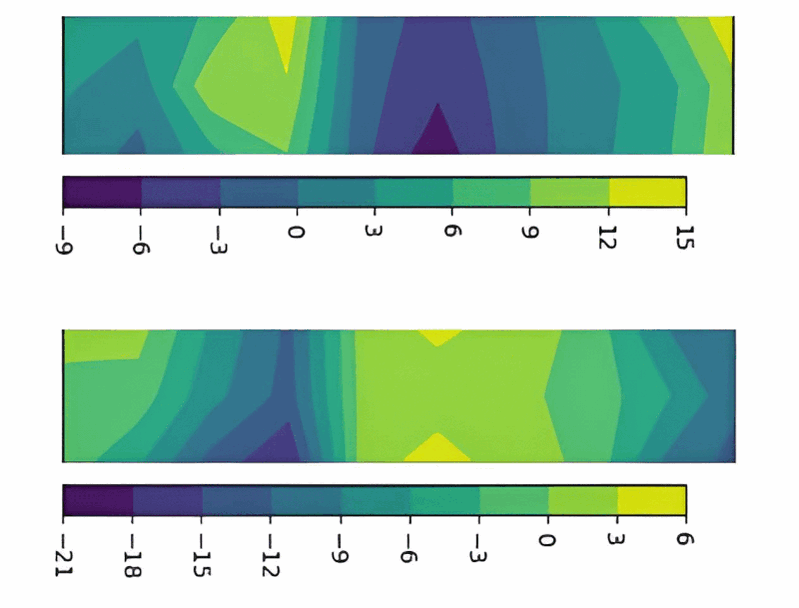
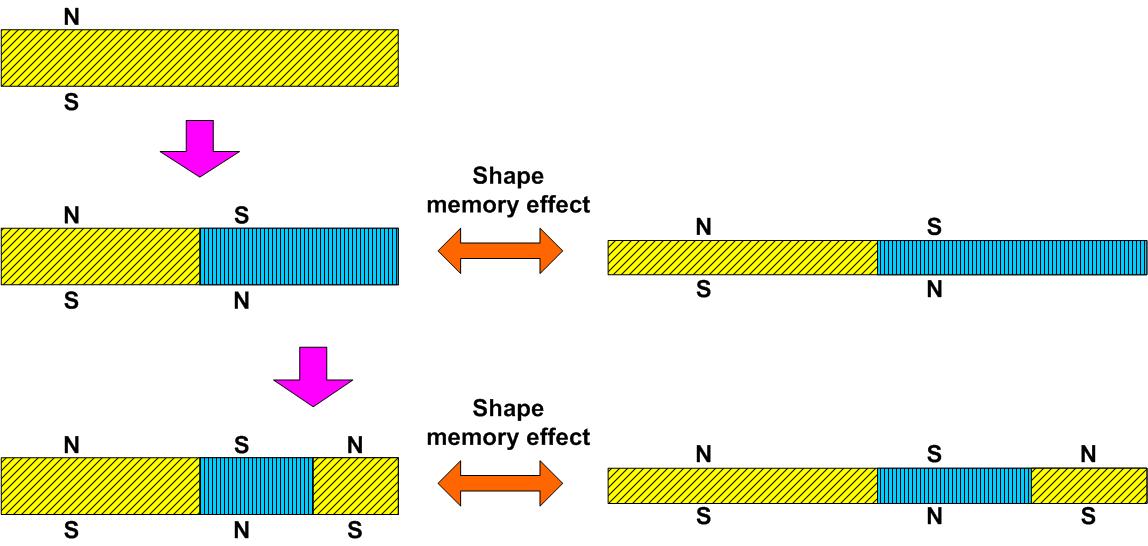
Switching of magnetic field |
(FYP) Fiona and Irfan Shariff
|
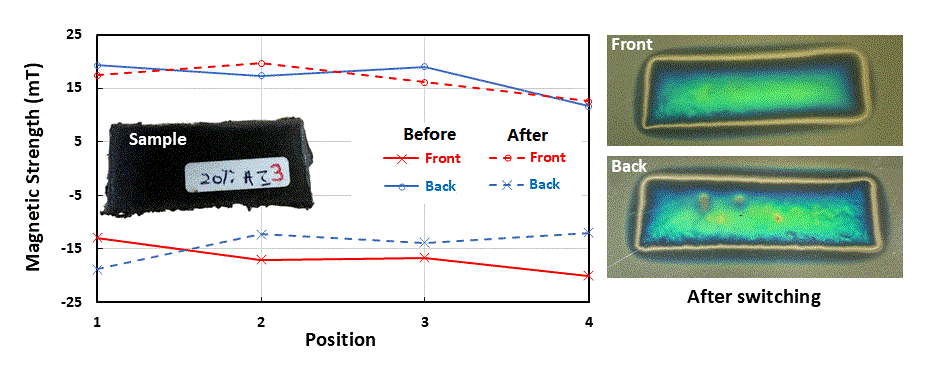
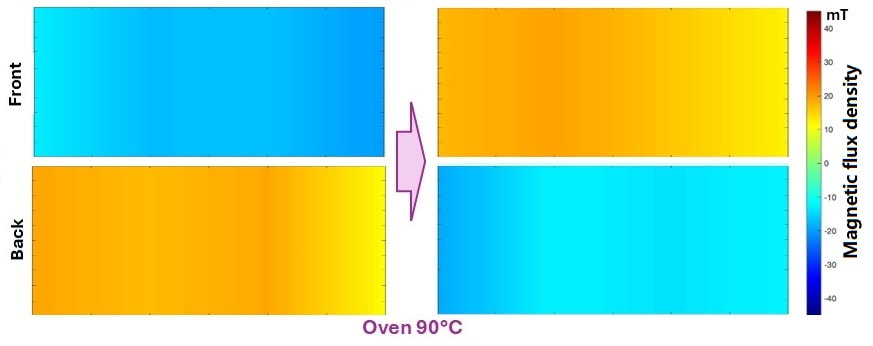
Switching one time
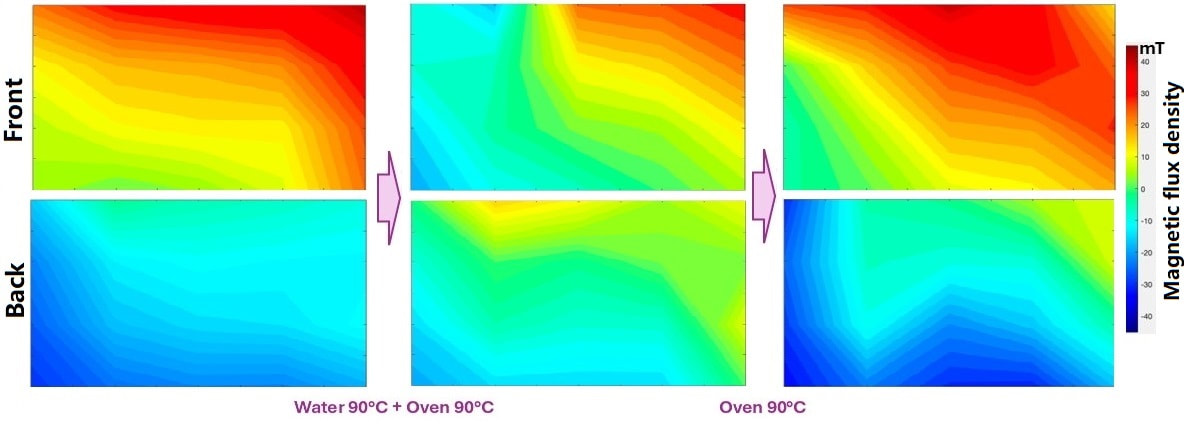
Partial switching and switching back
Shape memory magnets with re-programmable magnetic field

|
(FYP) Tan JM
Chen Z |
|
|
Chen Z and Tan JM (FYP)
|
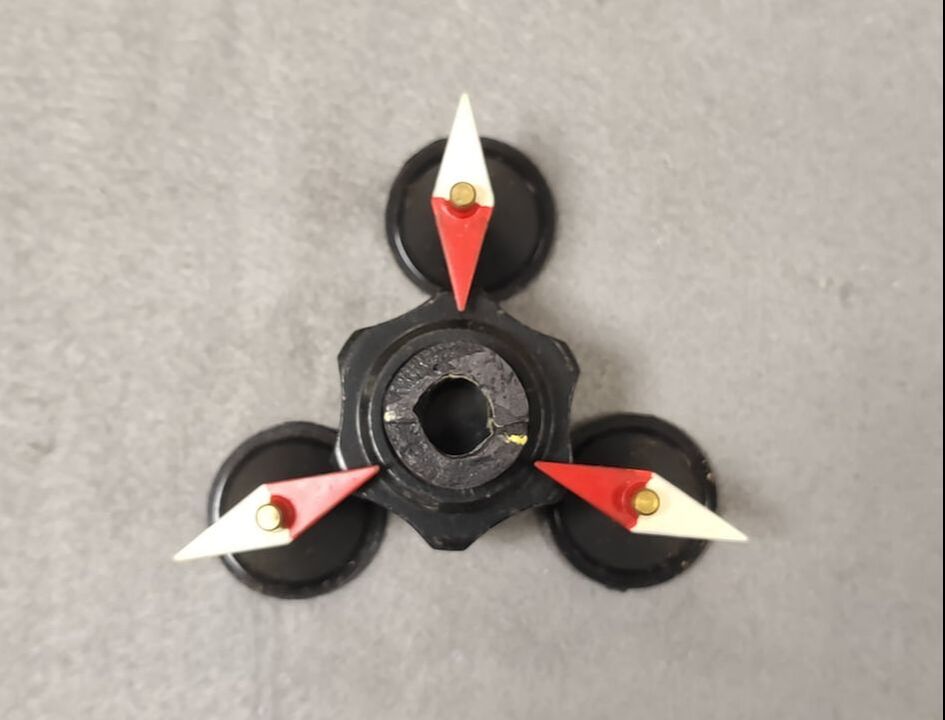
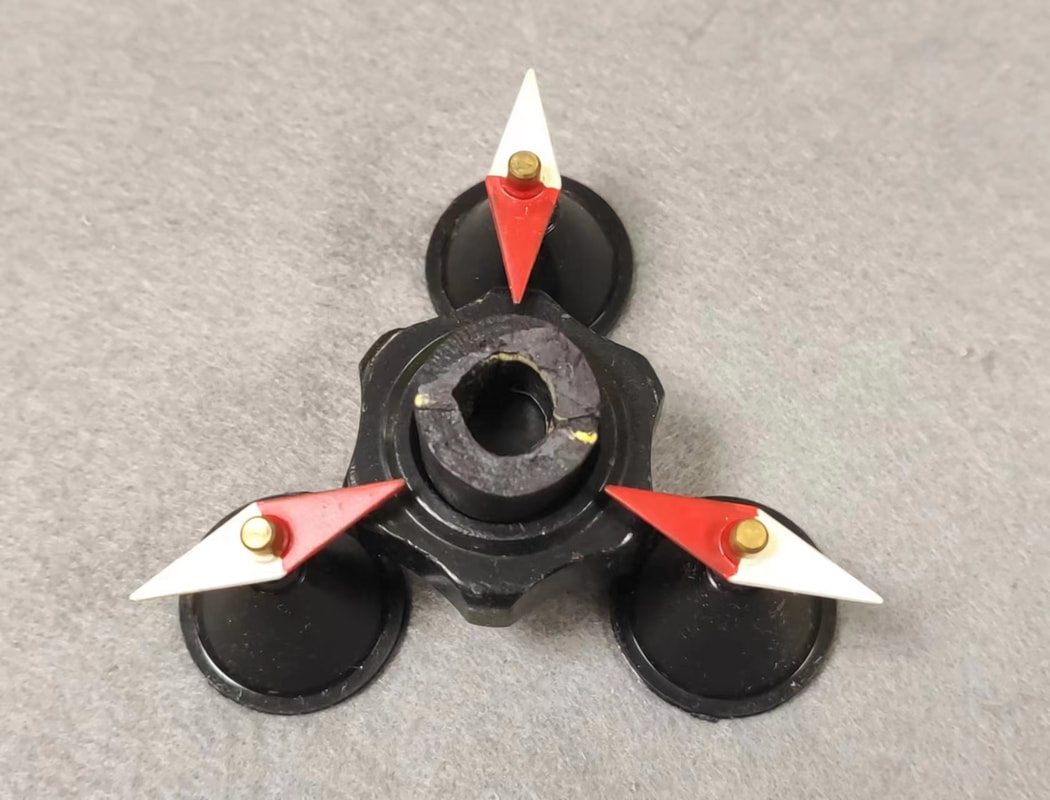
Lord of the rings(III) Final version(II) Still improving(I) Almost single pole on the out surface of a tube |
|
|
|
Semi-suspended |
|
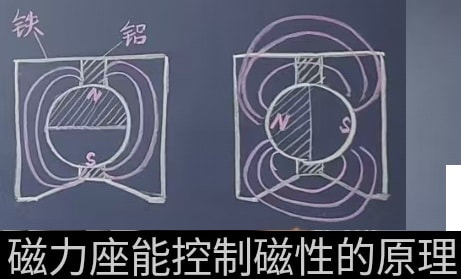
Magnetic Locking WITHOUT a Superconductor!磁性橡胶
|
|
什么是海尔巴赫阵列?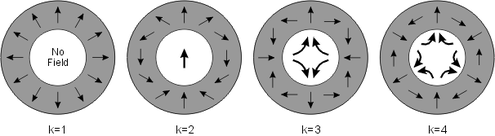
|
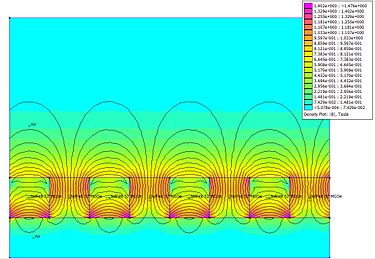
|

|

|
北京磁与科技有限公司
Laser-induced in situ reprogramming of magnetic shape memory composites for adaptive devicesZhang Q Q, Li R, Tao Y, Chen Y Y, Hu Y L, Wu D, Chu J R, Li J W. 2026. Laser-induced in situ reprogramming of magnetic shape memory composites for adaptive devices. Int. J. Extrem. Manuf. 8 015508.
|
Programmable/reprogrammable magneto-responsive composites (MRCs) are highly desirable for applications in soft robotics, morphable actuators, and biomedical devices due to their capabilities of undergoing reversible, complex, untethered, and rapid deformations. However, current MRC-based devices primarily rely on soft matrices, which revert to their original shapes and cease functioning when external magnetic fields are removed. Moreover, their magnetization programming, deformations, and functioning need to alternate between encoding and actuation platforms, limiting the adaptability and efficiency. Here, we present a reprogrammable magnetic shape-memory composite (RM-SMC) integrating a shape-memory polymer (SMP) skeleton with phase-transition magnetic microcapsules. High-intensity laser melts microcapsules for magnetic realignment under programmed fields, while low-intensity laser softens SMP for structural reconfiguration without compromising integrity. This dual-laser strategy facilitates in situ magnetization programming, shape morphing, and function execution within a single material system. Our innovative approach enables unique applications, including omnidirectional multi-degree-of-freedom actuators that can activate light switches, solar trackers that optimize energy capture, and adaptive impellers that modulate fluid pumping. By eliminating platform alternation and enabling shape/function retention post-actuation, the RM-SMC platform overcomes critical limitations in conventional MRCs, establishing a paradigm for multifunctional devices requiring persistent configuration control and field-independent operation.
|
|
Pattern architected soft magnetic actuation
|
Bioinspired shape-morphing soft magnetic actuators have potential applications in medicine, robotics, and engineering due to their soft body, untethered control, and infinite degrees of freedom. The shape programming of the soft magnetic actuators (consisting of soft ferromagnetic CI particles in a soft matrix) is an involved task, as it requires a moulding process severely limiting the capability to program complex shapes. The current study explores a shape programming technique that architects the particle pattern configuration in the actuator, mimicking the pattern found in the mould-programmed actuator, thereby eliminating the need for a mould and providing a greater capability of programming complex shapes. At first, actuators with some basic shapes are prepared using the mould programming technique and examined under a microscope to understand the configuration of particle alignment patterns in different shapes. Then, the pattern is architected using magnetic units in the soft matrix to eliminate the need for mould for shape programming. In this study, the programmed soft actuators are characterized for shape morphing and locomotion capability under an external actuating magnetic field. The crawler was found to move at a velocity of 3 mm s−1 under a periodic magnetic field of 1 Hz. The designed actuators are found to quickly respond to the magnetic field thereby generating the desired shapes.
|
仿生、快速响应的可磁调刚度超材料开发了一种新型磁可调刚度超材料 (MTSM),它能够通过磁场控制的结构变形实现快速有效的刚度调制。从肌节的自然刚度调制机制中汲取灵感,我们设计了 MTSM,使其在施加磁场的方向和强度的驱动下,在软、中等和僵硬状态之间无缝过渡。通过结合钕微粒和苯乙烯-异戊二烯-苯乙烯聚合物,我们实现了高弹性、磁灵敏度和连续模量可调性,从最软状态到最硬状态的刚度增加了 390% 以上。将 MTSM 集成到 3D 阵列中,可以通过沿不同轴施加的磁场实现精确的多层刚度控制,其性能在自适应轮中得到进一步验证,该轮可有效调整刚度以适应各种环境条件。
|
Bioinspired, Rapidly Responsive Magnetically Tunable Stiffness Metamaterials
27 May 2025 https://doi.org/10.1002/adma.202505880
Programmable mechanical materials often require dynamic stiffness adaptability, but existing solutions face challenges with slow response times and limited precision. This study introduces magnetically tunable stiffness metamaterials (MTSM) that utilize a bioinspired ternary programming framework to achieve rapid and precise stiffness modulation. Drawing inspiration from biological sarcomeres, which naturally adjust stiffness through structural changes, the MTSM design employs direct ink writing, a 4D printing method, to incorporate neodymium microparticles and a styrene-isoprene-styrene polymer matrix. This approach enables the metamaterial to transition between three distinct stiffness states—soft, moderate, and stiff—through structural deformation controlled by magnetic torque. Integration of MTSM into a 3D array further enhances its versatility, allowing multi-layer stiffness adjustments under magnetic fields. The MTSM array achieves an impressive 390 percent stiffness modulation range and rapid changes in response to an external magnetic field, surpassing the limitations of prior designs. These findings emphasize the potential of ternary programming in MTSM as a foundation for creating next-generation programmable mechanical systems capable of rapid and efficient adaptability.
|
|
Reprogrammable Mechanical Metamaterials via Passive and Active Magnetic Interactions
磁控可编程机械超材料
本研究通过实验展示了嵌入永磁体阵列的旋转方形机械超材料的可编程性,系统研究了磁体定向、剩余磁化强度和刚度对超材料静态与动态响应的影响。结果表明,通过精准调节超材料内的磁体定向,可在静态和动态载荷下实现显著的响应可调性。更复杂的磁节点配置可通过解耦准静态应力 - 应变行为与冲击载荷下的能量吸收来优化特定结构响应。此外,外部磁场可进一步增强可编程性,调节结构内的磁相互作用。该工作为开发可通过磁元件重分布或外部磁场实现机械响应可调的工程结构组件铺平了道路。
|
This study experimentally demonstrates the reprogrammability of a rotating-squares-based mechanical metamaterial with an embedded array of permanent magnets. How the orientation, residual magnetization, and stiffness of the magnets influence both the static and dynamic responses of the metamaterial is systematically investigated. It is showed that by carefully tuning the magnet orientation within the metamaterial, notable tunability of the metamaterial response can be achieved across static and dynamic regimes. More complex magnetic node configurations can optimize specific structural responses by decoupling the tunability of quasi-static stress–strain behavior from energy absorption under impact loading. Additionally, reprogrammability can be further enhanced by an external magnetic field, which modulates magnetic interactions within the structure. This work paves the way for developing engineered structural components with adaptable mechanical responses, reprogrammable through either the redistribution of magnetic elements or the application of an external magnetic field.
|
1. 本工作受头足类动物3D皮肤纹理能力的启发,引入了3D磁性形状变形系统,实现了可逆和连续的转换,具有广泛的复杂可重构形状。这是通过热磁主动致动实现的,由通过3D磁编码策略创建的磁化分布引导。
2. 该系统利用磁性形状变形平台(MMP),该平台由含有弹性体和低熔点合金(LMPA)颗粒的复合材料构建,LMPA颗粒包含铁磁颗粒。MMP可以使用可调刚度和磁活性可重构性促进的多模态磁致动来产生复杂、鲁棒的3D配置。
3. 3D视觉触觉显示器和光响应花卉机器人的概念验证演示突出了仿生3D磁性形状变形系统的潜力,表明其在3D电子、软机器人和视觉触觉人机界面方面具有广阔的应用前景
2. 该系统利用磁性形状变形平台(MMP),该平台由含有弹性体和低熔点合金(LMPA)颗粒的复合材料构建,LMPA颗粒包含铁磁颗粒。MMP可以使用可调刚度和磁活性可重构性促进的多模态磁致动来产生复杂、鲁棒的3D配置。
3. 3D视觉触觉显示器和光响应花卉机器人的概念验证演示突出了仿生3D磁性形状变形系统的潜力,表明其在3D电子、软机器人和视觉触觉人机界面方面具有广阔的应用前景
Magnetic Shape Memory Polymers with Integrated Multifunctional Shape Manipulations
|
磁性软材料的光热编程实现复杂且可重构的三维形变
|
Yiwen Bao, Jiyu Li, Tao Wang, Liu Wang, Hangxun Xu. Yiwen Bao, Jiyu Li, Tao Wang, Liu Wang, Hangxun Xu.
Photothermalprogramming of magnetic soft materials for complex and reconfigurable 3D deformations. Sci. China Mater. (2024). https://doi.org/10.1007/s40843-024-3107-8 |
A 3D-Printed Ferromagnetic Liquid Crystal Elastomer with Programmed Dual-Anisotropy and Multi-Responsiveness
Mechanical Fourier transform for programmable metamaterials
Phase-transforming metamaterial with magnetic interactions
|
科学家研发全新磁控变形材料,不用触碰也能移动物体
|
Soft shape-shifting materials offer enhanced adaptability in shape-governed
properties and functionalities. However, once morphed, they struggle to reprogram their shapes and simultaneously bear loads for fulfilling multifunctionalities. Here, we report a dynamic spatiotemporal shape-shifting kirigami dome metasheet with high deformability and stiffness that responds rapidly to dynamically changing magnetic fields. The magnetic kirigami dome exhibits over twice higher doming height and 1.5 times larger bending curvature, as well as sevenfold enhanced structural stiffness compared to its continuous counterpart without cuts. The metasheet achieves omnidirectional doming and multimodal translational and rotational wave-like shape-shifting, quickly responding to changing magnetic fields within 2 milliseconds. Using the dynamic shape-shifting and adaptive interactions with objects, we demonstrate its applications in voxelated dynamic displays and remote magnetic multimodal directional and rotary manipulation of nonmagnetic objects without grasping. It shows high-load transportation ability of over 40 times its own weight, as well as versatility in handling objects of different materials (liquid and solid), sizes, shapes, and weights. |
|
磁场诱导的非对称力学超材料
Magnetic field-induced asymmetric mechanical metamaterials
|
AbstractWe propose a magnetic field-induced asymmetric mechanical metamaterial. The tunable metamaterial integrates hard-Magnetic Active Elastomers (hMAEs) into the microstructural design combining snap-through, bi-stability, and local resonant effects. The proposed metamaterial design comprises resonating units made out of hMAE, and these units are supported by highly deformable curved beams connected with an elastomeric matrix. Activated by a magnetic field, the resonating units attain an unstable regime with dramatic configuration and stiffness variation. These controlled transformations significantly affect the elastic wave propagation. We illustrate that the proposed magnetoactive metamaterial enables bandgap tunability over a broadband low-frequency range. Thus, the proposed design allows remote and reversible control of the metamaterial performance. Moreover, the hMAE-based systems can incorporate the polarity and chirality stemming from the interaction of external magnetic fields and hMAE phases, giving rise to the unusual behavior of the metamaterial, and potentially enabling elastic cloaking.
|
|
Harnessing the rich nonlinear dynamics of highly deformable materials has the potential to unlock the next generation of functional smart materials and devices. However, unlocking such potential requires effective strategies to spatially engineer material architectures within the nonlinear dynamic regime. Here we introduce an inverse-design framework to discover flexible mechanical metamaterials with a target nonlinear dynamic response. The desired dynamic task is encoded via optimal tuning of the full-scale metamaterial geometry through an inverse-design approach powered by a fully differentiable simulation environment. By deploying such a strategy, mechanical metamaterials are tailored for energy focusing, energy splitting, dynamic protection and nonlinear motion conversion. Furthermore, our design framework can be expanded to automatically discover reprogrammable architectures capable of switching between different dynamic tasks. For instance, we encode two strongly competing tasks—energy focusing and dynamic protection—within a single architecture, using static precompression to switch between these behaviours. The discovered designs are physically realized and experimentally tested, demonstrating the robustness of the engineered tasks. Our approach opens an untapped avenue towards designer materials with tailored robotic-like reprogrammable functionalities.
|
|
【磁性肌肉】IF:14.7 Nature子刊:应用于柔性机器人的多功能磁性肌肉
|
Despite recent advancements, artificial muscles have not yet been able to strike the right balance between exceptional mechanical properties and dexterous actuation abilities that are found in biological systems. Here, we present an artificial magnetic muscle that exhibits multiple remarkable mechanical properties and demonstrates comprehensive actuating performance, surpassing those of biological muscles. This artificial muscle utilizes a composite configuration, integrating a phase-change polymer and ferromagnetic particles, enabling active control over mechanical properties and complex actuating motions through remote laser heating and magnetic field manipulation. Consequently, the magnetic composite muscle can dynamically adjust its stiffness as needed, achieving a switching ratio exceeding 2.7 × 10³. This remarkable adaptability facilitates substantial load-bearing capacity, with specific load capacities of up to 1000 and 3690 for tensile and compressive stresses, respectively. Moreover, it demonstrates reversible extension, contraction, bending, and twisting, with stretchability exceeding 800%. We leverage these distinctive attributes to showcase the versatility of this composite muscle as a soft continuum robotic manipulator. It adeptly executes various programmable responses and performs complex tasks while minimizing mechanical vibrations. Furthermore, we demonstrate that this composite muscle excels across multiple mechanical and actuation aspects compared to existing actuators.
|