|
(FYP) Wong KJ
|
Local heating via laser engraving machine
|
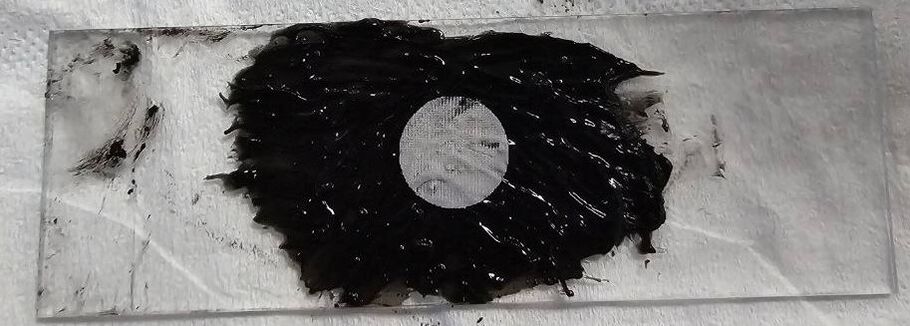
Non-laser heated area
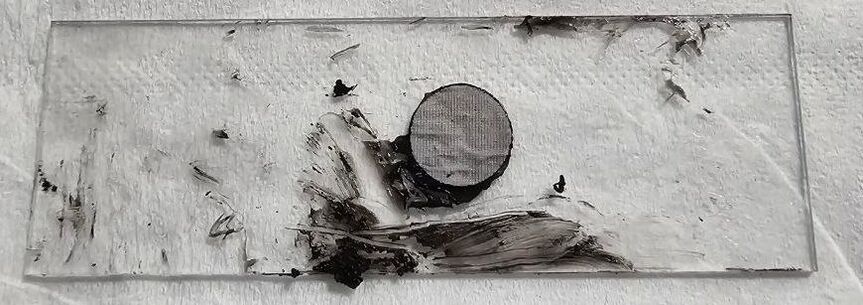
Locally laser heated
|
|
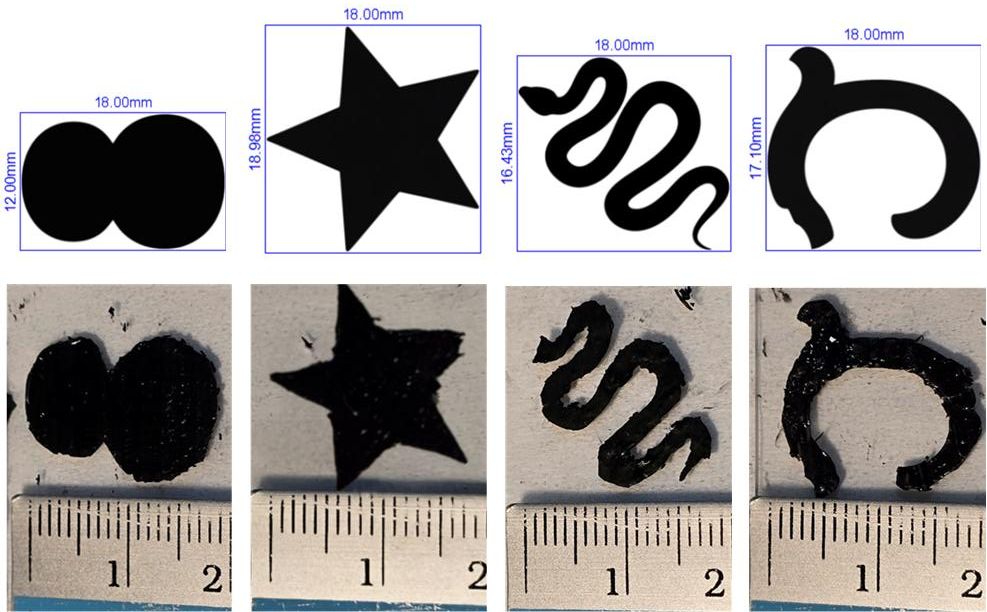
To locally heat specific regions within a solid polymer using waves, several methods can be employed, mainly utilizing electromagnetic waves, sound waves, or other forms of energy transfer:
1. Microwave Heating
1. Microwave Heating
- Principle: Microwaves are electromagnetic waves with frequencies ranging from 300 MHz to 300 GHz. Polar molecules within the polymer material rotate rapidly in a microwave field, generating heat. This heating can be concentrated in specific areas, especially if the polymer material has microwave-absorbing properties.
- Application: A directional microwave source can be used to focus microwaves on specific regions within the polymer via antennas or waveguides. By adjusting the frequency and power of the microwaves, the heating area can be precisely controlled.
- Principle: Infrared (IR) radiation is a form of thermal radiation that can be absorbed by polymer materials, causing localized temperature increases. By selecting the appropriate infrared wavelength, heating can be concentrated in specific areas.
- Application: An infrared laser or other IR source can be used to irradiate localized areas of the polymer. Controlling the focus and position of the laser achieves localized heating.
- Principle: Ultrasonic waves, with frequencies above 20 kHz, can propagate through the polymer and produce localized mechanical vibrations. These vibrations generate heat through friction and molecular collisions.
- Application: By focusing ultrasonic waves on specific areas of the polymer, precise localized heating can be achieved. This method is particularly suitable for thicker materials.
- Principle: An alternating electromagnetic field induces eddy currents in conductive materials, producing Joule heating. Although polymers are not typically conductive, adding conductive particles or nanomaterials can enable electromagnetic induction heating.
- Application: An induction coil can be used to induce eddy currents in specific regions of the polymer, achieving localized heating. This method is often used for polymers containing metal or conductive fillers.
- Principle: By incorporating photothermal conversion materials (such as metal nanoparticles or carbon nanotubes) into the polymer, these materials can convert light energy into heat. By irradiating these materials with a light source (e.g., laser), localized heating within the polymer can be achieved.
- Application: Select an appropriate light source (e.g., visible light, infrared light) to irradiate the polymer region containing photothermal conversion materials. Controlling the beam focus and power allows for localized heating.
- Principle: Incorporating magnetic nanoparticles (e.g., iron oxide nanoparticles) into the polymer, an external alternating magnetic field can cause these particles to vibrate and generate heat.
- Application: By adjusting the frequency and strength of the magnetic field, precise localized heating can be achieved in specific regions of the polymer.