Layered structures |
(FYP) Liang WJ
|
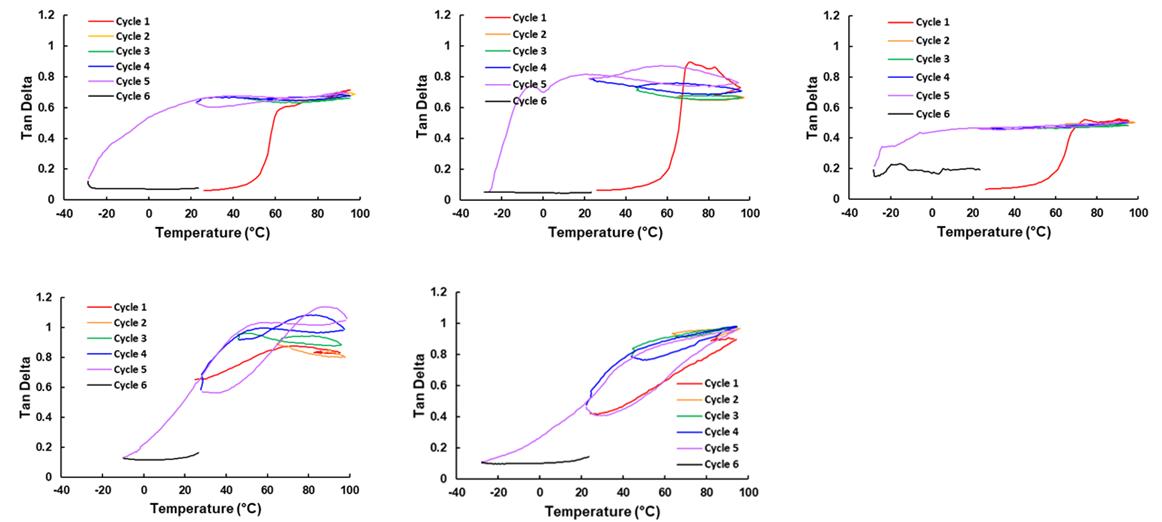
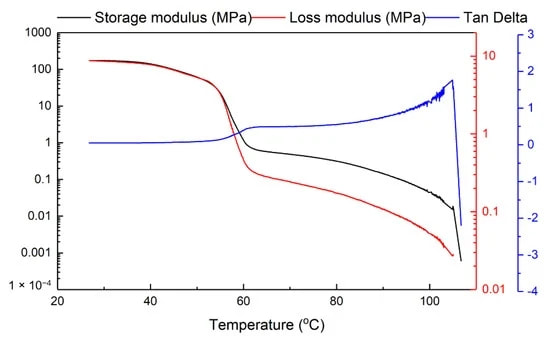
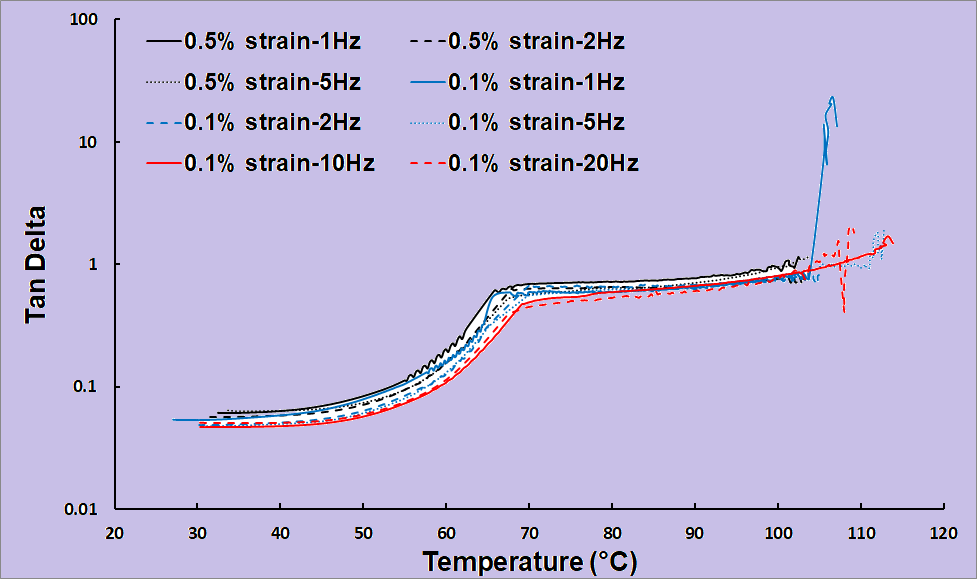
Vitrimer+TPU, till ...
Water borne TPU + silicone, high damping? prestretching for orientation dependency?
UV resin + silicone, stretching then cross-linking, orientation dependent Tg?
Magnetic vitrmer
Water borne TPU + UV resin. Transparent, stretching, UV cross-linking. Orientation dependency?
|
从-45°C到135°C,宽温高模量阻尼材料
通过装甲芯结构凝胶将宽温阻尼和高模量结合起来。凝胶将聚合物流体整合到聚合物网络中,形成聚合物流体凝胶(PFG),可在超宽温度范围内有效阻尼。它们利用流体相来增强柔韧性和能量耗散,并利用聚合物网络来提供机械稳定性。通过精确控制薄表面层的交联,引入了各向异性铠装芯结构,赋予材料高模量,从而同时实现优异的阻尼性能和高模量。通过在聚乙二醇(PEG)流体中共聚丙烯酸(AA)和甲基丙烯酸羟乙酯(HEMA),然后在Fe3+溶液中进行表面交联形成装甲芯结构来证明这种方法的有效性。所得装甲PFG (APFG)表现出高损耗因子(tanδ > 0.5,−45°C至135°C),与PFG相比,拉伸模量显著增加(从0.2到20 MPa)并且抗穿刺性增强。该材料有效地耗散能量,将回弹减少98%以上,并在−20°C时有效将振动力降低高达72%。此外,APFG延长了电子设备的使用寿命,确保其稳定的性能,并提供卓越的瞬态冲击保护,保护电子设备和人体关节。
|
Armored polymer-fluid gels with integrated damping and impact protection across broad temperatures
Unpreferable vibrations and impacts pose substantial risks to sensitive devices, structures, and the human body, demanding materials capable of providing both high energy dissipation and impact protection across a broad temperature range. Traditional damping materials often fail to meet these demands because of a trade-off between damping and mechanical strength. We introduce an innovative strategy to fabricate armored polymer-fluid gels (APFGs) that combine high damping and high modulus for effective damping and impact protection under extreme conditions. By using a controlled surface cross-linking process through diffusion, we greatly enhance the mechanical strength of polymer-fluid gels without sacrificing their damping capabilities. This asymmetric design results in an unprecedented loss factor (tanδ > 0.5 from −45 degrees to 135 degrees Celsius, peaking at tanδ = 2.2) while achieving a tensile modulus of 20 megapascals. This method resolves the long-standing damping-modulus trade-off, positioning APFGs as promising candidates for robust damping and impact protection in electronics and human motion applications.
|
Q/A with ChatGPT.
Any example materials that have high tan delta value over a wide temperature range?
Yes, there are several materials that have a high tan delta value over a wide temperature range. Some examples include:
What are typical values?
The typical values of tan delta depend on the specific material, the testing conditions, and the frequency of deformation. In general, elastomers and polymers tend to exhibit higher tan delta values than metals and ceramics.
Here are some approximate values for typical materials at room temperature (25°C) and a frequency of 1 Hz:
Any example materials that have high tan delta value over a wide temperature range?
Yes, there are several materials that have a high tan delta value over a wide temperature range. Some examples include:
- Nitrile rubber (NBR): NBR is an elastomer that exhibits a high and constant tan delta value over a wide temperature range (-40 to 120°C). This makes it a popular material for applications such as seals, gaskets, and hoses.
- Ethylene propylene diene monomer (EPDM): EPDM is another elastomer that exhibits a high and constant tan delta value over a wide temperature range (-40 to 150°C). It is commonly used in automotive and industrial applications.
- Polyvinyl chloride (PVC): PVC is a thermoplastic polymer that exhibits a high tan delta value over a wide temperature range (-50 to 80°C). It is often used in applications such as electrical cables and pipes.
- Polyurethane (PU): PU is a thermoset polymer that exhibits a high and constant tan delta value over a wide temperature range (-40 to 120°C). It is commonly used in applications such as coatings, adhesives, and foams.
- Epoxy resins: Epoxy resins exhibit a high and constant tan delta value over a wide temperature range (-50 to 150°C). They are often used in applications such as coatings, adhesives, and composites.
What are typical values?
The typical values of tan delta depend on the specific material, the testing conditions, and the frequency of deformation. In general, elastomers and polymers tend to exhibit higher tan delta values than metals and ceramics.
Here are some approximate values for typical materials at room temperature (25°C) and a frequency of 1 Hz:
- Nitrile rubber (NBR): tan delta ~ 0.2-0.5
- Ethylene propylene diene monomer (EPDM): tan delta ~ 0.2-0.5
- Polyvinyl chloride (PVC): tan delta ~ 0.1-0.3
- Polyurethane (PU): tan delta ~ 0.2-0.6
- Epoxy resins: tan delta ~ 0.2-0.5